


Research and Insights
Myth 1: Excessive Protein Intake Is Necessary for Glute Growth
The Belief:
Many think that eating over 200 g of protein daily is essential for building glutes, equating more protein with bigger gains.
The Reality:
1. Per-Meal vs. Total Daily Protein:
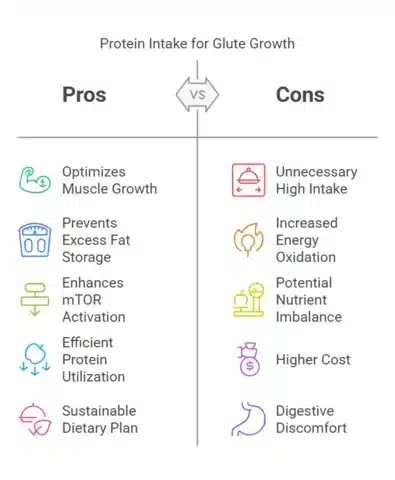
Muscle Protein Synthesis (MPS) plateaus at about 0.4 g of protein per kg of body weight per meal. For example, a 70 kg (154 lb) individual maximises MPS at roughly 28 g per meal.
(Reference: Moore et al., 2009)
2. Total Daily Need:
For optimal growth, aim for 1.6 – 2.2 g per kg of body weight per day roughly 112–154 g for a 70 kg person over 3-4 meals.
(Reference: Phillips & Van Loon, 2011)
3. Leucine & mTOR Activation:
Around 2–3 g of leucine per meal (abundant in whey, eggs, and chicken) activates the mTOR pathway to boost muscle synthesis.
(Reference: Norton et al., 2016)
4. Amino Acid Oxidation:
Any protein consumed above this threshold is typically oxidized for energy or stored as fat.
(Reference: Bray et al., 2012)
5. Practical Takeaway:
Stick to a daily goal of 1.6–2.2 g/kg. Plan 3-4 meals, ensuring each contains around 0.4 g/kg of protein and includes leucine-rich sources. Vegan athletes can combine grains with legumes (e.g., rice and beans) to hit their leucine targets.
Myth 2: Carbs Make Your Glutes Look Flat
The Belief:
Low-carb diets are often promoted as essential for lean, defined glutes, with the assumption that cutting carbs will prevent a “flat” appearance.
The Reality:
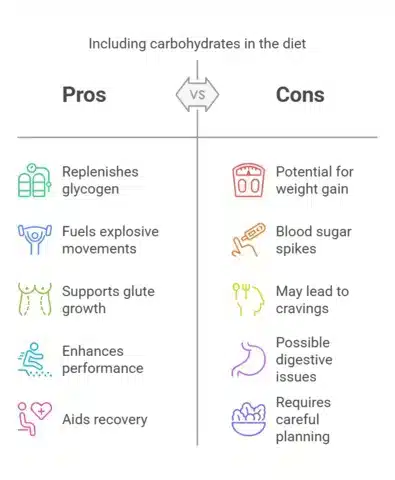
Carbohydrates are crucial for replenishing glycogen stores, which fuel explosive movements like hip thrusts and squats, exercises essential for glute growth.
(Reference: Bergström et al., 1967)
Practical Takeaway:
Incorporate 3–5 g/kg of carbohydrates into your daily diet. For instance, enjoy a bowl of oats before a workout and rice or sweet potatoes afterwards to maximise performance and recovery.
CTA #1: Ready to optimise your carb strategy for peak performance? Explore Booty Centre’s nutrition guides at BootyCenter.com for expert-approved meal plans that fuel your glute workouts!
Myth 3: Meal Frequency Dictates Glute Growth
The Belief:
There’s a notion that eating six or more small meals a day is necessary to boost metabolism and muscle growth.
The Reality:
Research shows that muscle growth is driven by total caloric and protein intake, not the number of meals. Studies have found little difference between consuming 2 versus 6 meals when total nutrient intake is matched.
(Reference: Schoenfeld et al., 2021)
Practical Takeaway:
Focus on 3–4 balanced meals per day. If it fits your lifestyle, intermittent fasting can be a viable option, what matters most is meeting your overall calorie and protein needs.
Myth 4: Supplements Are Essential for Glute Development
The Belief:
Many claim that glute pills or BCAAs are critical for building your booty.
The Reality:
While creatine, caffeine, and protein supplements may provide slight benefits, most “booty enhancers” lack peer-reviewed evidence. True glute growth comes from a balanced diet and targeted resistance training.
(Reference: Cooper et al., 2012)
Practical Takeaway:
Invest in proven supplements like 5 g of creatine per day if needed, and focus on whole foods to naturally support muscle growth.
Myth 5: You Can’t Grow Glutes in a Caloric Deficit
The Belief:
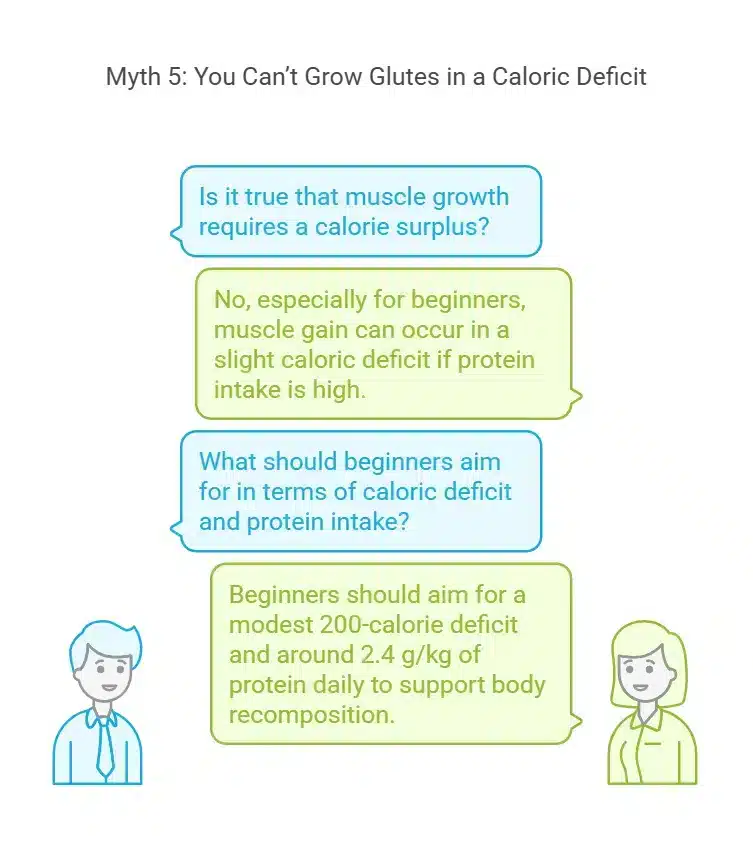
It’s widely assumed that muscle growth requires a calorie surplus.
The Reality:
Especially for beginners, muscle gain can occur even in a slight caloric deficit if protein intake is sufficiently high.
(Reference: Longland et al., 2016)
Practical Takeaway:
For beginners, aim for a modest 200-calorie deficit paired with around 2.4 g/kg of protein daily. This strategy supports body recomposition, maintaining or even growing muscle while losing fat.
Myth 6: Grass-Fed Protein Is Superior for Glute Growth
The Belief:
Grass-fed meat is often believed to be inherently better for muscle growth due to its “natural” benefits.
The Reality:
Research indicates that grass-fed and grain-fed beef offer similar protein quality, especially regarding leucine content, crucial for muscle synthesis.
(Reference: Daley et al., 2010)
Practical Takeaway:
Focus on meeting your protein needs with nutrient-dense sources. Budget-friendly options like chicken or tofu can deliver similar benefits without the extra cost.

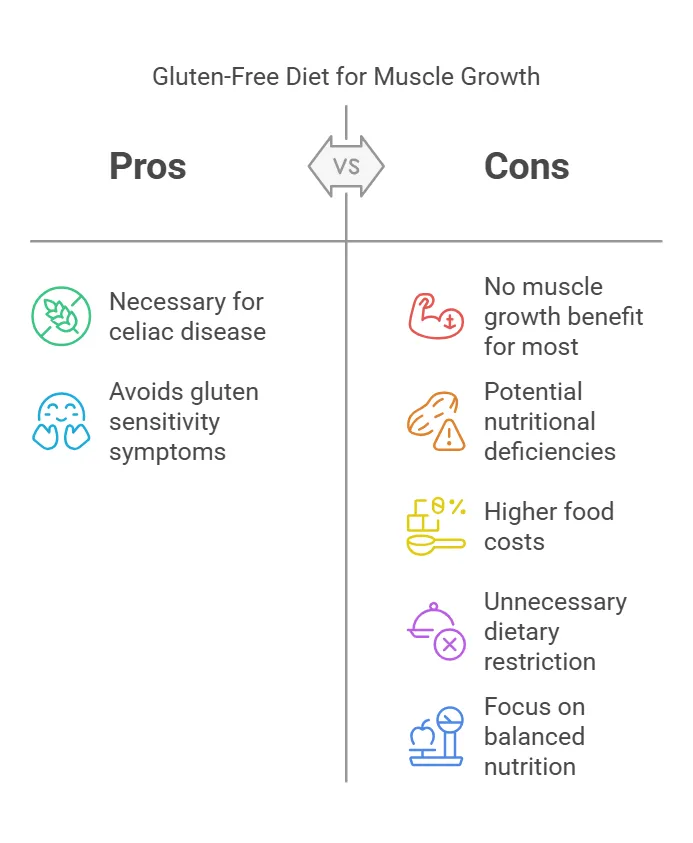
Myth 7: Gluten-Free Diets Enhance Glute Development
The Belief:
Some claim that eliminating gluten will enhance muscle growth and performance.
The Reality:
For most people, unless you have celiac disease or gluten sensitivity, going gluten-free does not provide additional muscle-building benefits.
(Reference: Gaesser & Angadi, 2012)
Practical Takeaway:
Unless medically necessary, there’s no need to cut gluten from your diet. Focus on balanced nutrition that supports your overall fitness goals.
CTA #2: Discover balanced, nutrient-rich meal plans that support your glute growth without unnecessary restrictions. Visit BootyCenter.com for our exclusive nutrition strategies designed by top experts!
Myth 8: Organic Foods Are Necessary for Muscle Growth
The Belief:
Organic foods are touted as superior for enhancing muscle gains due to their “clean” profile.
The Reality:
Studies have shown that organic and conventional foods are largely comparable in nutrient content. The key is meeting your overall protein and caloric needs.
(Reference: Smith-Spangler et al., 2012)
Practical Takeaway:
Smart shopping is about focusing on nutrient density rather than organic labels. Achieve your protein and energy targets with any high-quality food.
Myth 9: Dairy Causes Inflammation, Hindering Glute Growth
The Belief:
Many believe that dairy products cause inflammation and impede muscle growth.
The Reality:
For most people, dairy is a valuable source of high-quality protein and can even be anti-inflammatory. Issues typically arise only in those with lactose intolerance.
(Reference: Heaney, 2009)
Practical Takeaway:
If you suspect dairy might be an issue, try incorporating small amounts first. Otherwise, enjoy Greek yogurt or cottage cheese as effective, protein-rich options.

Myth 10: Detox Diets Lead to Better Muscle Definition
The Belief:
Detox diets and cleanses are marketed as a way to flush toxins and enhance muscle definition.
The Reality:
Your body’s liver and kidneys continuously detoxify naturally. Detox diets often risk nutritional deficiencies without any added benefits to muscle definition.
(Reference: Klein & Kiat, 2015)
Practical Takeaway:
Focus on healthy habits like staying well-hydrated and consuming fibre-rich vegetables rather than falling for quick-fix detoxes.
Conclusion
In summary, the journey to a perfectly sculpted booty isn’t paved with extreme protein intakes, carb cutting, or over-reliance on supplements. Instead, effective glute development comes from a balanced approach, one that combines optimal nutrient timing, a well-planned caloric intake, and consistent resistance training. By debunking these common myths and following science-backed strategies, you can achieve your glute goals without falling for misleading quick fixes.
Are you ready to cut through the clutter and transform your glutes with the right nutrition and training? Visit Booty Center now to explore our expert programs and nutrition guides. With our 12-Week Booty Blueprint and personalised coaching, you’re well on your way to the strong, defined glutes you’ve always wanted.
Stay informed, train smart, and let science lead the way to your best glutes yet!
References
– Moore et al., 2009 – Journal of Applied Physiology
– Phillips & Van Loon, 2011
– Norton et al., 2016
– Bray et al., 2012
– Bergström et al., 1967
– Schoenfeld et al., 2021
– Cooper et al., 2012
– Longland et al., 2016
– Daley et al., 2010
– Gaesser & Angadi, 2012
– Smith-Spangler et al., 2012
– Heaney, 2009
– Klein & Kiat, 2015
For more science-backed glute nutrition and training advice, visit BootyCenter.com.