


1. Lies and Misconceptions
Many fitness myths circulate online, often painting intermittent fasting as a magic bullet for achieving a perfectly toned booty and eliminating stubborn thigh fat. Let’s set the record straight:
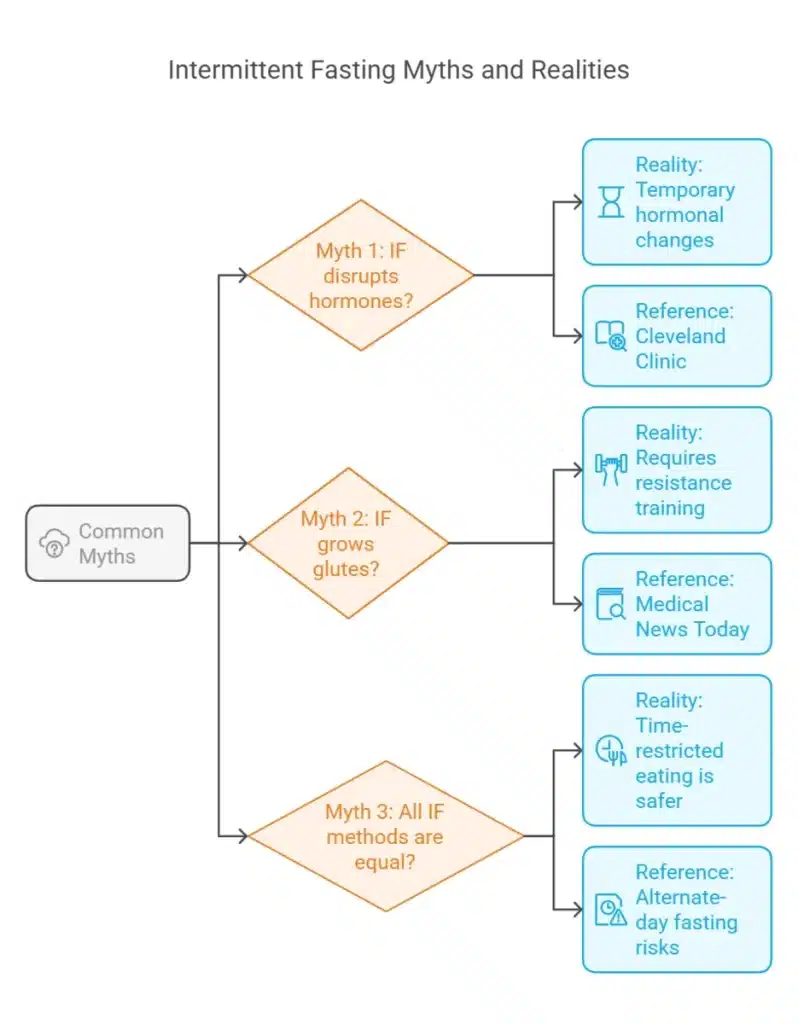
Myth 1: “Intermittent fasting (IF) disrupts all female hormones and causes infertility.”
Reality:
While extreme IF protocols, like those that restrict eating to a 4-hour window, can lower estrogen and progesterone in pre-menopausal women, most studies indicate these hormonal changes are temporary and remain within normal ranges. For postmenopausal women, IF appears to have minimal impact on hormonal balance.

Reference:
– Cleveland Clinic on IF for Women: https://health.clevelandclinic.org/intermittent-fasting-for-women
Myth 2: “IF alone can grow your glutes or eliminate cellulite.
Intermittent fasting may help reduce overall body fat, including in the thighs, but it doesn’t selectively target fat loss in the glutes or stimulate muscle growth. Glute development requires resistance training, and cellulite reduction is influenced by genetics, collagen health, and overall body fat percentage.
Fuel your performance with balanced nutrition! Discover Booty Center’s expert meal plans that strategically combine intermittent fasting with resistance training. Visit BootyCenter.com now to learn more!
Reference:
– Medical News Today on IF and hormones: https://www.medicalnewstoday.com/articles/does-intermittent-fasting-affect-female-hormones
Myth 3: “All IF methods work equally for women.
Not all fasting protocols are created equal. Time-restricted eating (such as a 12-hour fasting period) is generally safer and more sustainable for pre-menopausal women. In contrast, alternate-day fasting can carry a higher risk of hormonal imbalances.
Reference:
– ISSA on Intermittent Fasting: https://www.issaonline.com
2. Why Females Believe These Myths
Understanding why these myths persist can help you navigate the clutter of conflicting advice:
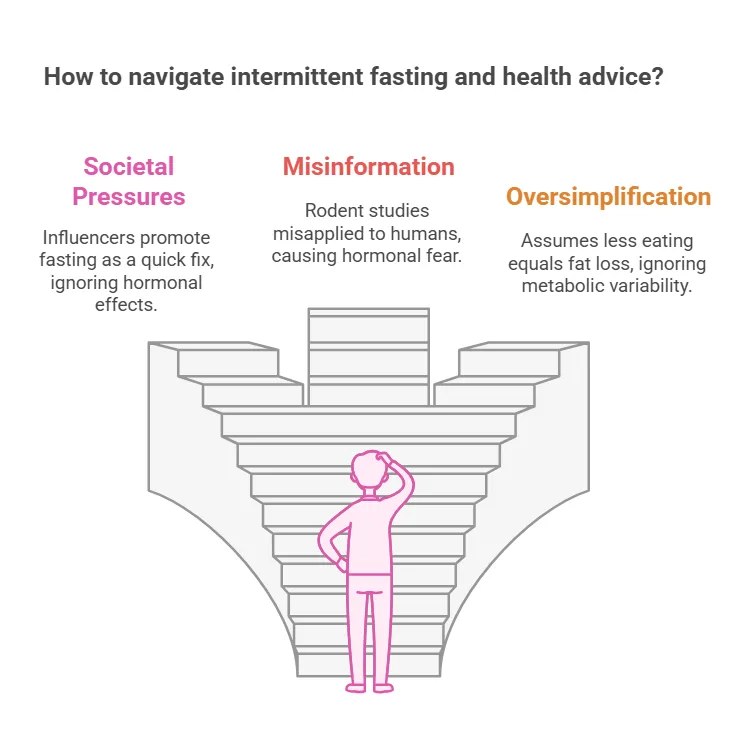
– Societal Pressures: Fitness influencers often promote IF as a “quick fix” for a toned, Instagram-ready physique, while glossing over the complex hormonal nuances that affect women.
-= Misinformation: Some studies on rodents have shown severe hormonal disruptions with extreme fasting. Unfortunately, these findings are sometimes inappropriately generalized to human females.
– Oversimplification: The notion that “eating less equals fat loss” ignores the body’s metabolic adaptations and the individual variability of hormonal responses.
Reference:
– University of Illinois Study on IF and Hormones: https://ahs.uic.edu/news-stories/new-data-on-how-intermittent-fasting-affects-female-hormones/
3. Facts and Truths
Let’s examine what the scientific evidence really tells us about intermittent fasting, hormones, and glute development.
Hormonal Impacts of IF
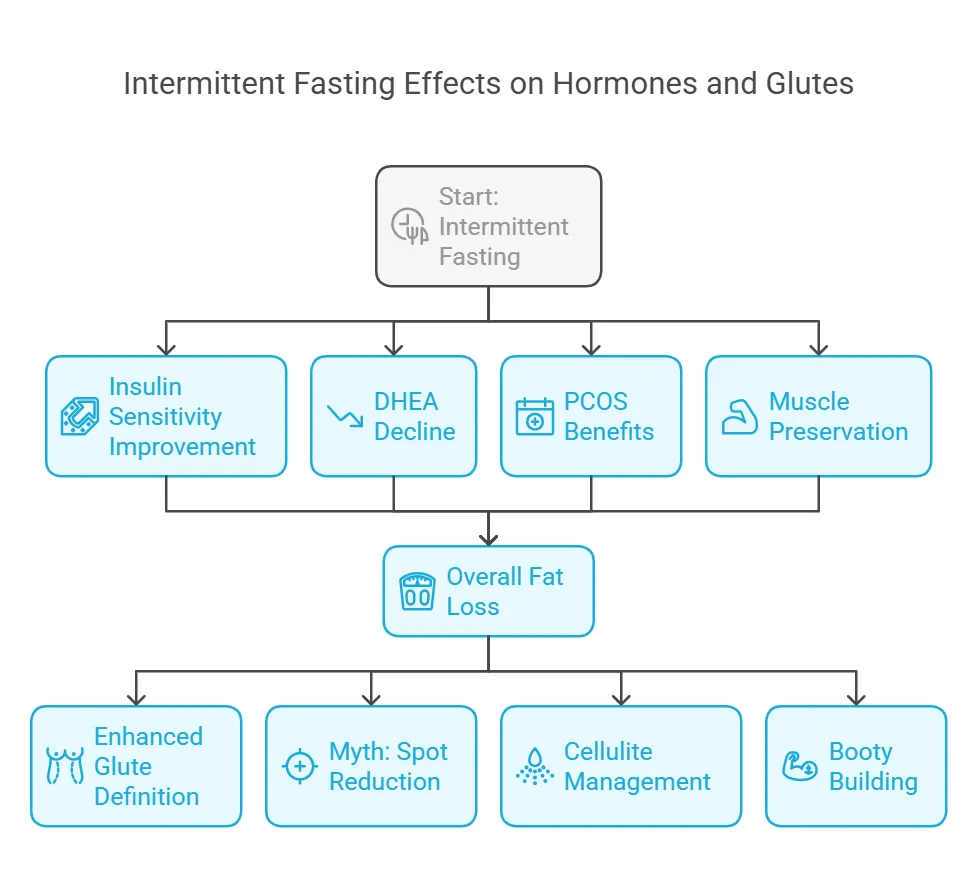
1. Insulin Sensitivity: Intermittent fasting has been shown to improve insulin resistance, which helps stabilize blood sugar levels and supports overall fat loss, including from the thighs.
2. DHEA Decline: Some studies indicate that IF can lead to a modest 14% drop in DHEA levels – a hormone linked to ovarian function. Importantly, these changes generally remain within normal limits and may even lower breast cancer risk, though postmenopausal women should monitor their levels closely.
Reference:
– Varady, K.A., et al. “Effect of time‐restricted eating on sex hormone levels in premenopausal and postmenopausal females.” Obesity, 2022. PubMed
3. PCOS Benefits: Women with PCOS have reported improved menstrual regularity and reduced androgen levels when following modified IF protocols like the 5:2 diet or a 10-hour eating window.
4. Muscle Preservation: Contrary to popular belief, intermittent fasting does not inherently cause muscle loss as long as protein intake is adequate, muscle mass (especially in the glutes) is maintained during overall fat loss.
Glute Growth & Fat Loss
– Fat Reduction: IF can reduce overall body fat, which might enhance glute definition. However, the myth of “spot reduction” is false; fat loss occurs uniformly throughout the body.
– Cellulite: There is no direct evidence linking IF to cellulite reduction. Effective cellulite management relies more on hydration, collagen support, and resistance training.
– Booty Building: Real glute growth requires progressive resistance training such as squats, hip thrusts, and deadlifts- to stimulate muscle hypertrophy. IF should be viewed as a supportive strategy for overall body composition rather than a standalone solution for sculpting the glutes.
Tired of chasing Instagram trends with no real results? Transform your glutes with our 12-Week Booty Blueprint. Visit BootyCenter.com and use code BB60 for a 20% discount on science-backed glute training programs!
Reference:
– Nutrients Review on Intermittent Fasting: https://www.nature.com/articles/s41574-024-01009-4
– ISSA on IF and Hormones: https://www.issaonline.com
4. Reliable Sources & References
For those who want to delve deeper, here are some key resources:
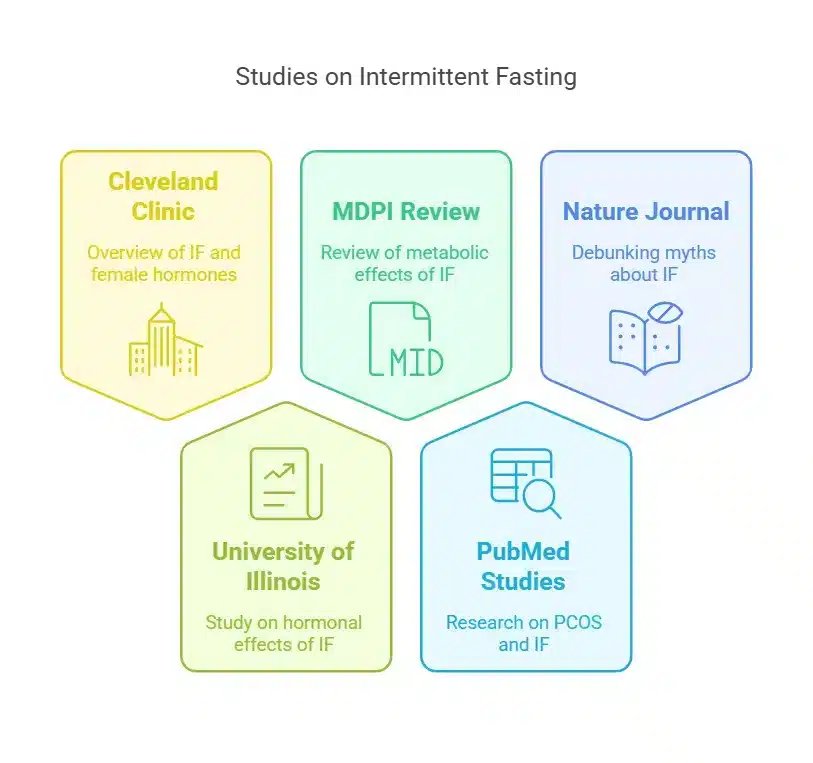
1. Cleveland Clinic on IF and Female Hormones:
Cleveland Clinic – Intermittent Fasting for Women
2. University of Illinois Study on Hormonal Effects of IF:
University of Illinois – New Data on IF
3. MDPI Review on IF’s Metabolic Effects:
MDPI – Intermittent Fasting Review
4. PubMed Studies on PCOS and IF:
PubMed
5. Nature Journal Debunking IF Myths:
Conclusion
Intermittent fasting can be a powerful tool for weight management and improved metabolic health, but it’s not a magic solution for sculpting glutes or spot reducing fat. The real secret lies in combining a balanced approach to IF with targeted resistance training and proper nutrition. Understanding that the effects on hormones are nuanced and that every woman’s body is unique will help you tailor your approach for optimal results.
References for Conclusion:
– Cleveland Clinic on Intermittent Fasting: https://health.clevelandclinic.org/intermittent-fasting-for-women
– University of Illinois Study on IF: https://ahs.uic.edu/news-stories/new-data-on-how-intermittent-fasting-affects-female-hormones/
– Nature Journal on IF Myths: https://www.nature.com/articles/s41574-024-01009-4
– MDPI and PubMed Resources: https://www.mdpi.com | https://pubmed.ncbi.nlm.nih.gov
Thank you for reading our detailed guide on intermittent fasting, female hormones, and glute goals. Stay strong, stay informed, and above all, stay Booty-full!