
Before 2006, if you wanted bigger glutes, the advice was squats, lunges and deadlifts. Good exercises, but none of them was built around the glutes. Then a strength coach in Arizona went out to his garage one night, and the glute world got its own signature lift.
This chapter follows the barbell hip thrust from that garage to the lab. It is a story about a real step forward, and about one very common misreading of the science that came with it.
Before 2006
The glute exercise family tree
The hip thrust did not come from nowhere. By 2006, glute exercises already came in four families: moves that lift the body against gravity, bridges, side glute lifts, and squats. Here is each family as our sources record it, from the old gym staples to the moves that later MRI scans tested.
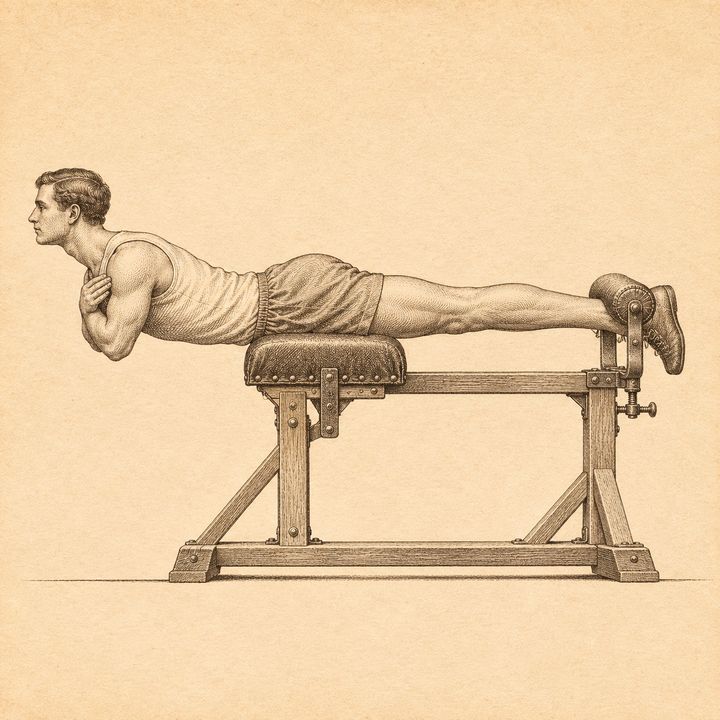 AI illustrationBack raiseOld gym stapleLegs fixed, the upper body lifts.
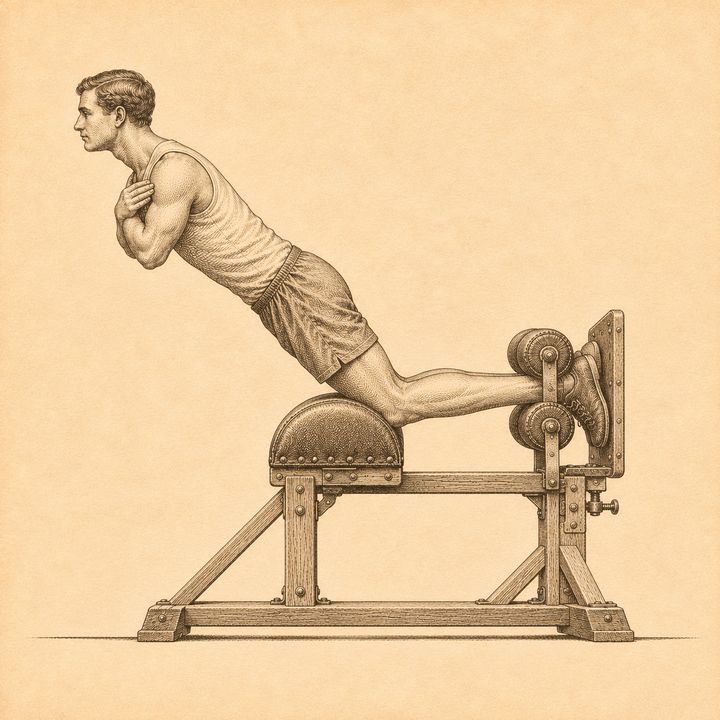 AI illustrationGlute ham raiseSoviet; US version mid 1980sMichael Yessis brought it west. Chapter 5.
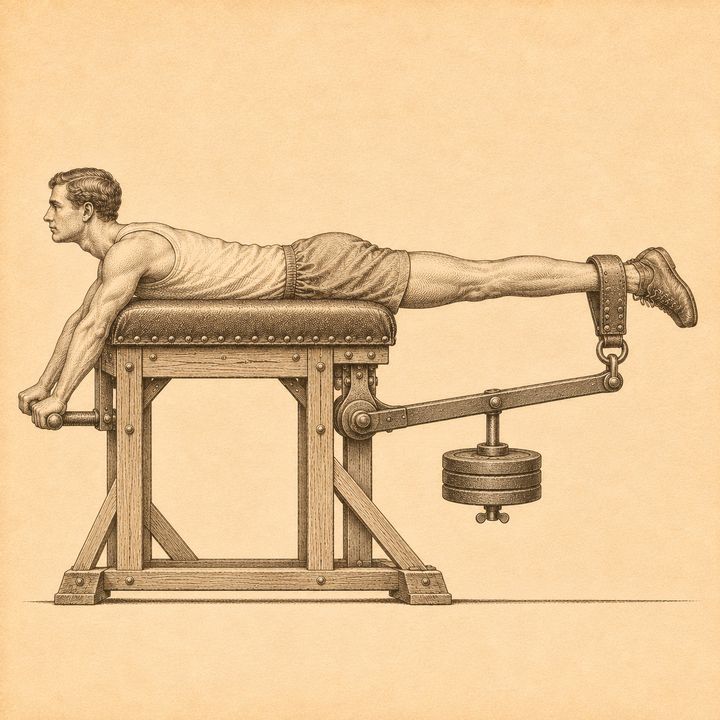 AI illustrationReverse hyperIdea 1973 · patent 1994Louie Simmons flipped the back raise. Chapter 5.
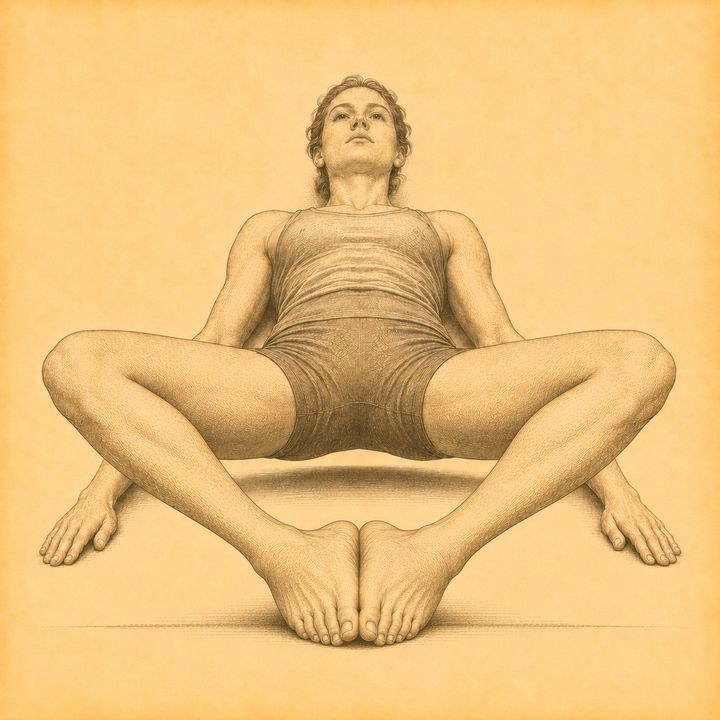 AI illustrationFrog pump1980s?Bret Contreras points to a Rachel McLish book. We have not seen the page.Lead, not yet confirmed
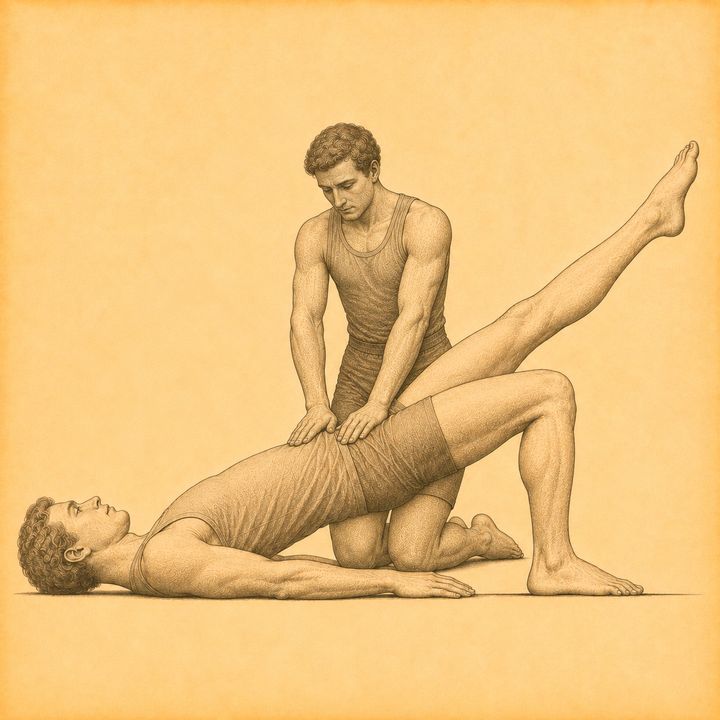 AI illustrationPartner-resisted bridgeSupertraining, 2003 editionLoaded bridges for track athletes, as Bret Contreras describes them. Chapter 5.
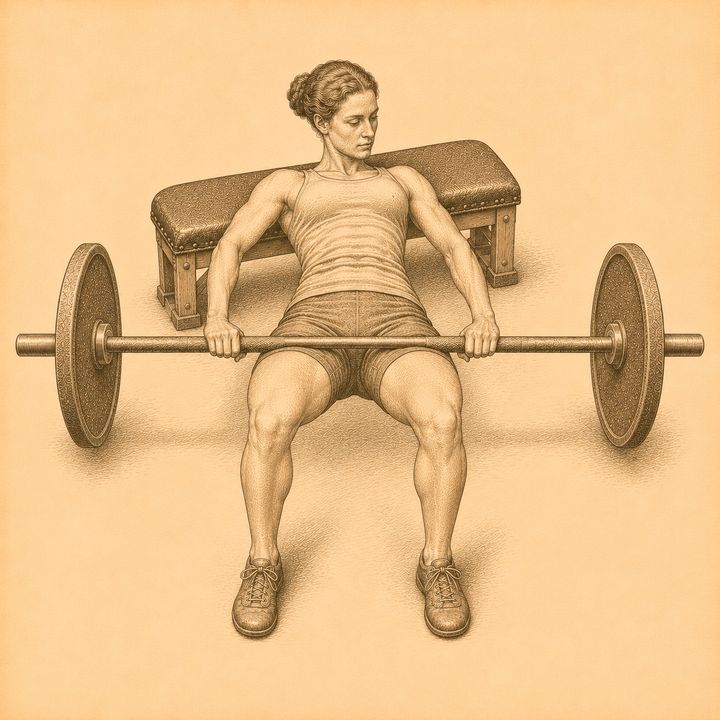 AI illustrationBarbell hip thrust2006 · in print 2011Shown at the start, before the hips drive up. A garage in Arizona, then the lab. Chapter 7.
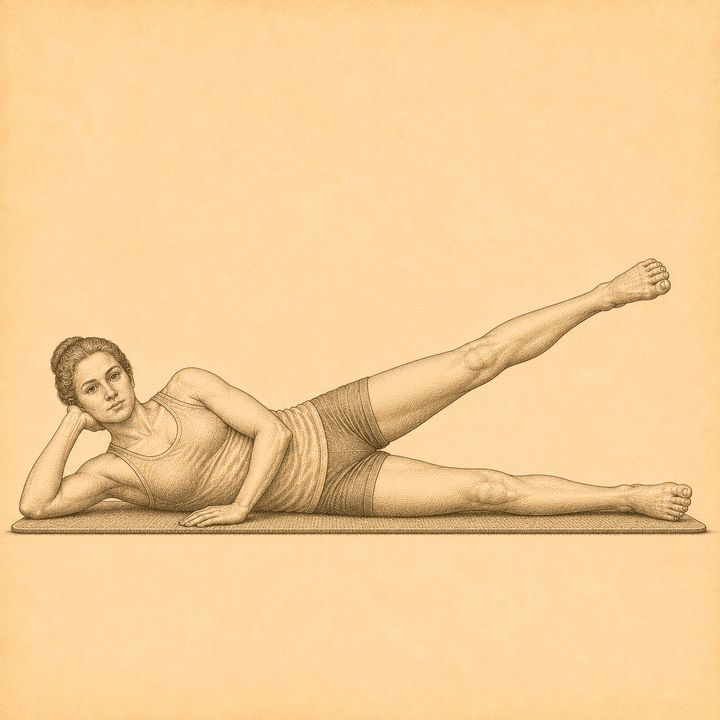 AI illustrationSide-lying leg raise1980s tapes · ranked 2009Top for the side glute at 81% of maximum. Chapter 6.
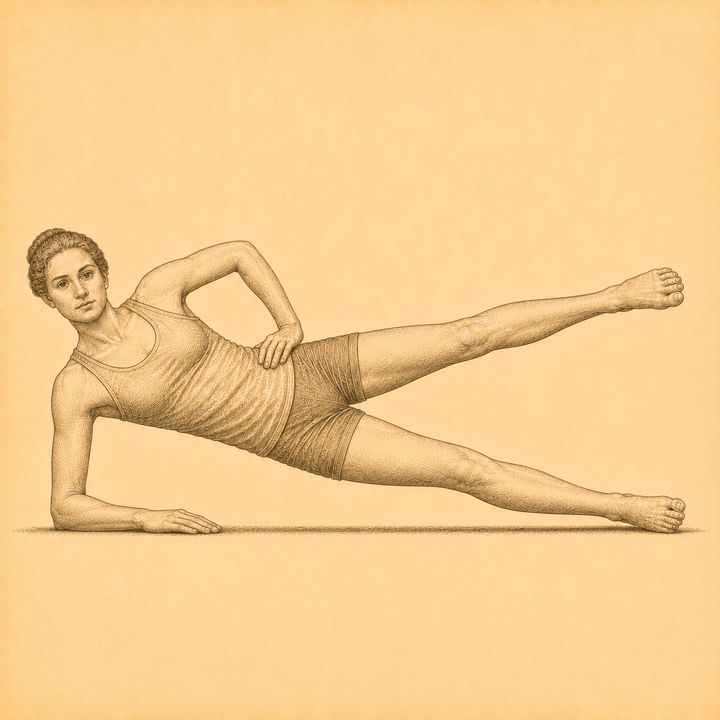 AI illustrationSide plank with leg liftRanked 2011Side glute signal 103% of maximum. Chapter 4.
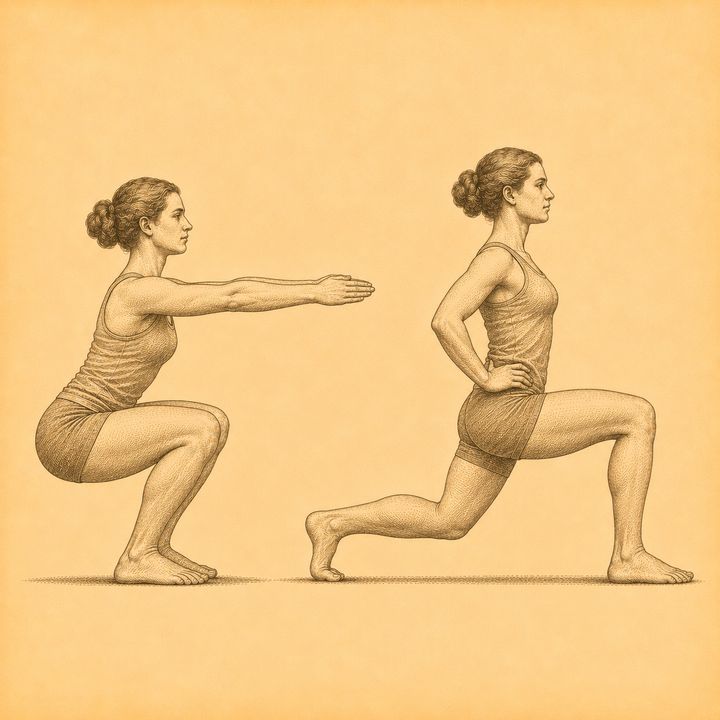 AI illustrationSquat and lunge1980s home videosThe base of Buns of Steel 3, 1989. Chapter 6.
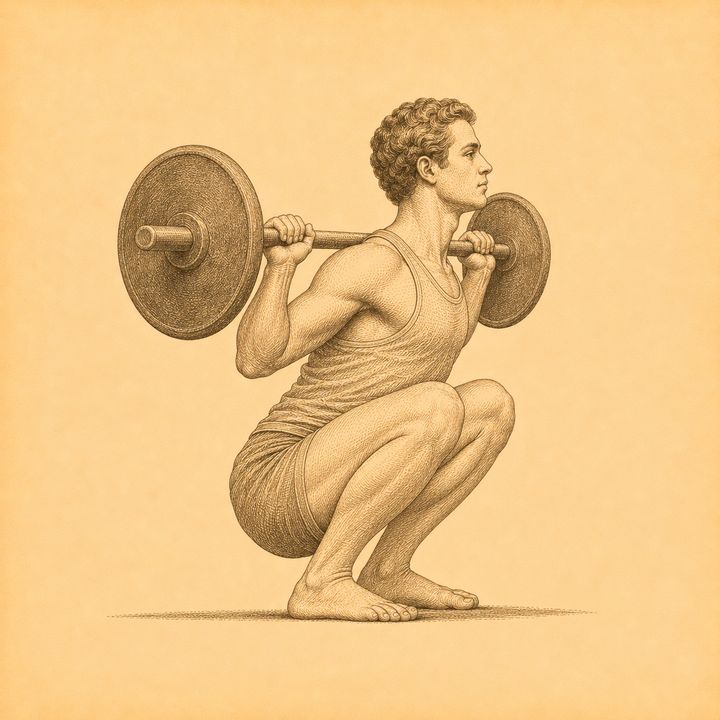 AI illustrationFull squatMRI 2019Glute max grew 6.7% with full squats, 2.2% with half. Chapter 8.
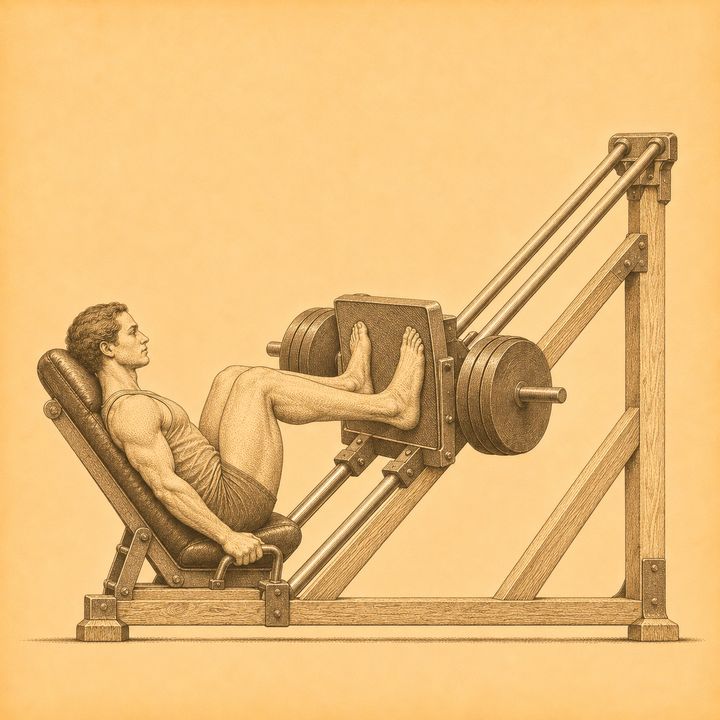 AI illustrationLeg pressMRI 2026Glute max grew 15.4%; knee extension, none. Chapter 8.
All pictures in this tree are engraving-style illustrations made with AI for this magazine. They are not historical images. Years show when each move appears in the sources we cite, not the first time anyone did it. A dashed card is a lead we are still checking.
Part 1 · The garage
A fight on TV and a dip belt
According to his own account, on 10 October 2006 the strength coach Bret Contreras was watching a fight on TV. One fighter was pinned on his back. Contreras wondered why the fighter did not buck harder with his hips to throw the other man off. He walked out to his garage gym and tried to load that same movement.
His first version hung four 45 pound plates from a dip belt. By December he had built a first machine. Before long he found that a plain bench and a barbell did the job: upper back on the bench, barbell across the hips, drive the hips up.
Chapter 5 showed that loaded bridges were already on paper in Supertraining. Contreras himself has credited those drawings. What he added was the bench, the barbell, a name, and years of persistent promotion that turned it into the best known glute exercise in the world.
Part 2 · Into print
From blog to journal to bestseller
In 2011, Contreras, John Cronin and Brad Schoenfeld wrote the technique up in the Strength and Conditioning Journal, a journal read by coaches. The lift now had a name in print: the barbell hip thrust.
In 2013, with co-author Kellie Davis, he published Strong Curves, a training book written for women, with the hip thrust as one of its main glute exercises. In 2019, with Glen Cordoza, he published Glute Lab, a 608 page manual on one muscle group. Glute training had become its own field.
Part 3 · The lab
How much bigger was the signal?
In 2015, Contreras and colleagues took the lift into the lab. Thirteen trained women did the hip thrust and the back squat with electrodes on their glutes. In the upper glute max, the hip thrust gave a mean signal of 69.5 percent of maximum. The back squat gave 29.4 percent. More than double.
A follow-up in 2016 compared barbell, band and American hip thrust variations in the same way. Then, in 2017, came a training study. Adolescent male athletes did six weeks of either hip thrusts or front squats. The front squat group looked better for the vertical jump. The hip thrust group looked better for short sprints. It was early evidence, and it measured performance, not muscle size.
Read the fine print
The 2015 paper measured the signal during a lift, not muscle growth over weeks. It said so, and asked for training studies to find out. That difference matters for the next part of the story.
Part 4 · The misreading
Bigger signal, more muscle?
Many readers, coaches and influencers took the bigger signal to mean more muscle. If the glutes light up more in a hip thrust, surely it must grow them more? It is an easy step to take. The 2015 paper never claimed it.
In 2018, Andrew Vigotsky and colleagues published a careful warning. EMG, they explained, is affected by many things besides how hard a muscle works, from electrode placement to skin and fat. Using the size of the signal to predict long-term growth is often not supported by the evidence. You have to test growth directly.
- 2006The garage: a loaded hip bump.
- 2011The barbell hip thrust in print.Key
- 2013Strong Curves.
- 2015Lab: hip thrust signal more than double the squat.Key
- 2017First training study: sprints and jumps.
- 2018Vigotsky: signal does not predict growth.
- 2019Glute Lab, 608 pages.
The old belief this chapter tests
"A bigger EMG signal means more muscle growth."
Not supportedThe hip thrust really does light up the glutes more than the squat. But a bigger signal during a lift is not the same as more growth over months. The original paper never said it was, and in 2018 Vigotsky and colleagues showed why the leap is often wrong.
What this means for training today
The hip thrust is a great tool for loading the glutes hard through hip extension, and many people find it the easiest way to feel them work. But do not choose exercises by EMG rankings alone. Whether one lift grows the glutes more than another is a question for training studies. Chapter 8 tells you what they found.