
For more than a decade, glute exercises were ranked by one number: how hard the muscle fired on EMG. The hip thrust won those rankings, and many people took that as proof that it builds the most glute. But nobody had actually measured the muscle growing.
This final chapter is about the moment the field started to measure the thing it cared about: muscle size, seen on a scan, before and after weeks of training. The answers were not what most people expected.
Part 1 · The old way
Ranking by signal
In 2015, Bret Contreras and colleagues tested thirteen trained women. In the upper glute max, the hip thrust gave a mean signal of 69.5 percent of maximum. The back squat gave 29.4 percent. Many people took that as proof that hip thrusts build more glute.
But the paper itself did not say that. It asked for training studies to find out. In 2018, Andrew Vigotsky and colleagues explained why. The size of the signal depends on many things besides how hard a muscle works, and predicting growth from it is often not supported. Someone had to measure the muscle itself.

How they measure growth
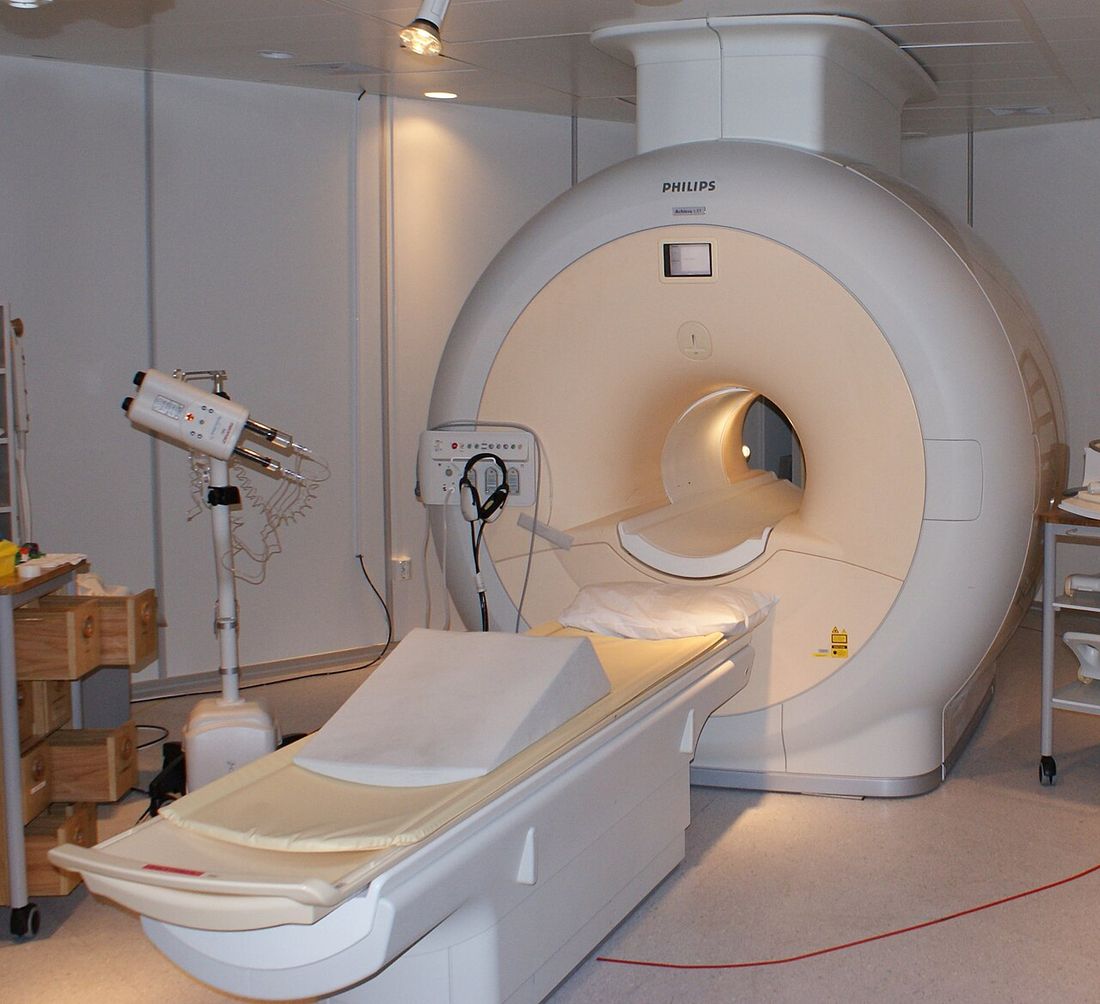
MRI takes many thin slices of the body and adds them up into a muscle volume. Ultrasound measures how thick a muscle is at a few points. MRI is the gold standard. Ultrasound is cheaper and quicker. Numbers from the two methods should not be compared directly.
Part 2 · The first scan
Squat depth, 2019
In 2019, in Tokyo, Keitaro Kubo's team trained seventeen men for ten weeks. One group did full squats. The other did half squats. MRI measured the muscles before and after.
Part 3 · Head to head
Hip thrust against back squat, 2023
Then came the test people had argued about for years. In 2023, at Auburn University, Daniel Plotkin, Michael Roberts and colleagues had 34 untrained adults do either hip thrusts or back squats for nine weeks, with MRI before and after.
Glute growth was similar in both groups. The squat group also grew their quads and adductors more. The exercise with more than double the signal did not build more glute.
Part 4 · More scans
Adding, pooling and a leg press surprise
In 2024, in Brazil, Witalo Kassiano and colleagues trained 33 untrained young women for ten weeks. One group did the leg press and the stiff-leg deadlift. The other did the same, plus the barbell hip thrust. Measured with ultrasound, glute max thickness rose 9.3 percent with the hip thrust added and 6.0 percent without. So the hip thrust helped as an addition to a program.
In 2025, Walter Krause Neto and colleagues published the first pooled analysis of glute max growth. Only twelve studies qualified. Together they showed a moderate training effect, with deep squats, hip thrusts, the leg press and kneeling hip extensions all growing the muscle.
And in 2026 came a surprise. In Japan, Sumiaki Maeo's group had seventeen untrained adults train one leg on the leg press and the other on the knee extension, for twelve weeks. The leg press leg gained 15.4 percent in glute max volume. The knee extension leg gained none.
- 2015Signal: hip thrust more than double the squat.
- 2018Vigotsky: signal does not predict growth.
- 2019Kubo: deep squats grow the glutes.Key
- 2023Plotkin: hip thrust and squat, similar growth.Key
- 2024Kassiano: adding the hip thrust helps.
- 2025First pooled analysis.
- 2026Leg press grows the glute max.
The old belief this chapter tests
"The exercise with the biggest signal builds the most muscle, and squats and leg presses are only for the quads."
Not supportedThe whole field ran on the first idea for a decade. Then the scans came: the hip thrust had more than double the signal, yet the growth came out similar. And squats and the leg press grew the glute max in every scan that tested them.
Part 5 · Still open
What we do not know yet
A lot is still open. Most of these studies used beginners, and they ran nine to twelve weeks. We know much less about trained lifters over months and years, about women and men separately, and about which part of the glutes grows with which exercise. The best answer in 2026 is a humble one: many exercises that load hip extension hard can grow the glutes, and how hard and how often you train them probably matters more than which one wins an EMG ranking.
What this means for training today
Build your program on hard, progressive hip extension work, and do not chase signal rankings. Deep squats, hip thrusts, the leg press, deadlift variations and kneeling hip extensions have all grown the glute max in measured studies. Pick the ones you can train hard, safely and consistently, and give them time.
That is where this magazine ends, for now. Two hundred years after Cuvier guessed what our glutes are for, we can finally measure what makes them grow. The next chapters are being written in labs right now.

