
Chapter 2 ended with a puzzle. The wires showed that the glute max is mostly quiet when we stand and walk. So why is ours so big? No other primate has a backside like ours. Something in our past must have built it.
This chapter follows three scientists who each gave a different answer, over more than thirty years, and the treadmill test that changed the conversation in 2006. It is also the chapter where we have to be most careful, because the final answer is still not settled.
Part 1 · The puzzle
Same muscle, different build
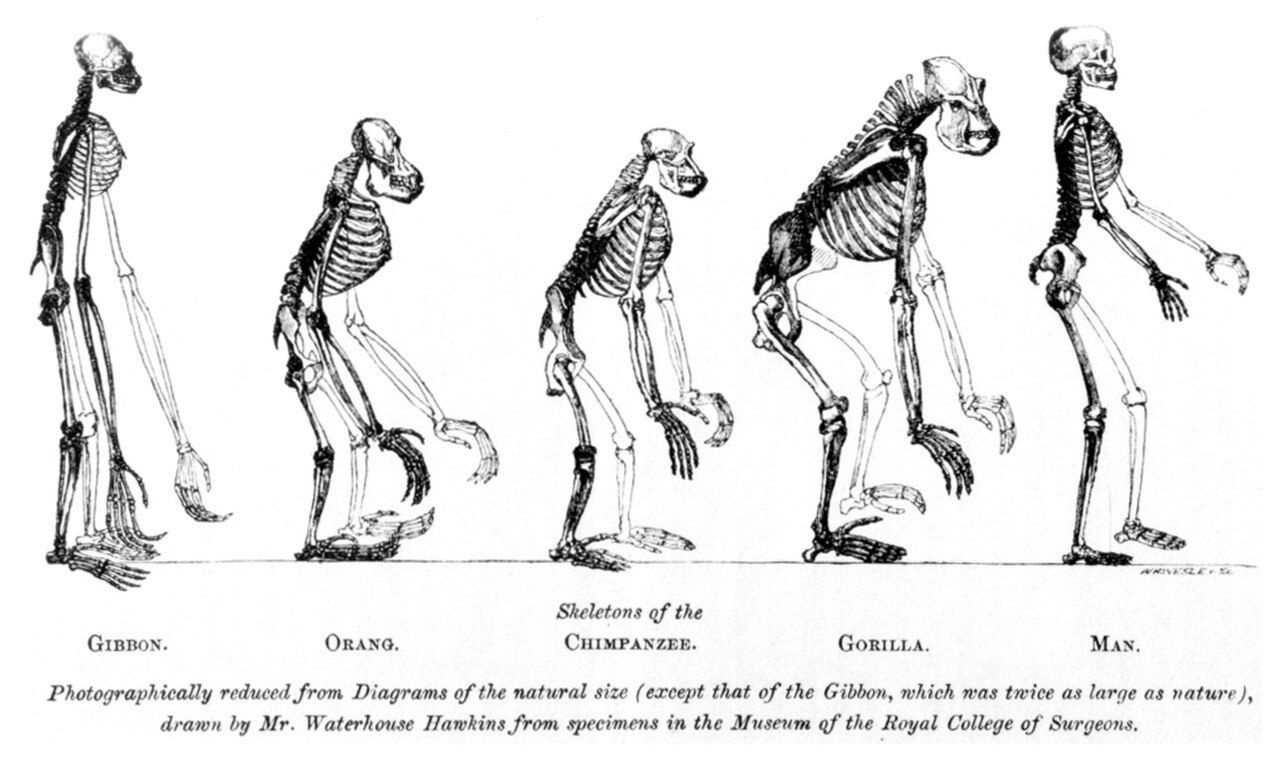
Apes have glutes too. But ours are built very differently. In apes, most of the glute max sits low, as a big lower part that reaches down toward the knee. Humans lost that lower part. What we kept is the upper part, and in us it is much bigger and thicker than in any ape.
For most of the 1800s and 1900s, the answer to "why?" seemed obvious. We are the only animal that stands upright all day. Our glute must be what holds us up. Georges Cuvier said it around 1800, in the passage you met in Chapter 1, and later anatomists added walking to the list.
The problem, as Chapter 2 showed, is that when scientists in the 1950s and 1960s finally recorded the muscle, it was almost silent in quiet standing and in ordinary walking. So the old answer could not be the whole story. Something else had to explain the human glute.
Part 2 · Three answers
Sideways, tools, or running?
Answer 1 · Jack Stern, 1972: keeping the trunk from tipping sideways
In 1972 the anatomist Jack Stern compared the glute max across primates in detail. He found three things that are unique to the human version, all in the upper part. It is thicker than in any other primate. It has a new, firm origin on the pelvis. And it gains a new attachment into the tough band on the side of the thigh.
His reading was that this upper part works with the side glutes to keep the trunk from tipping sideways over the standing leg. In other words, it helps balance us on one leg, which is what every step of upright walking and running asks for.
Answer 2 · Mary Marzke, 1988: controlling the trunk when we use tools
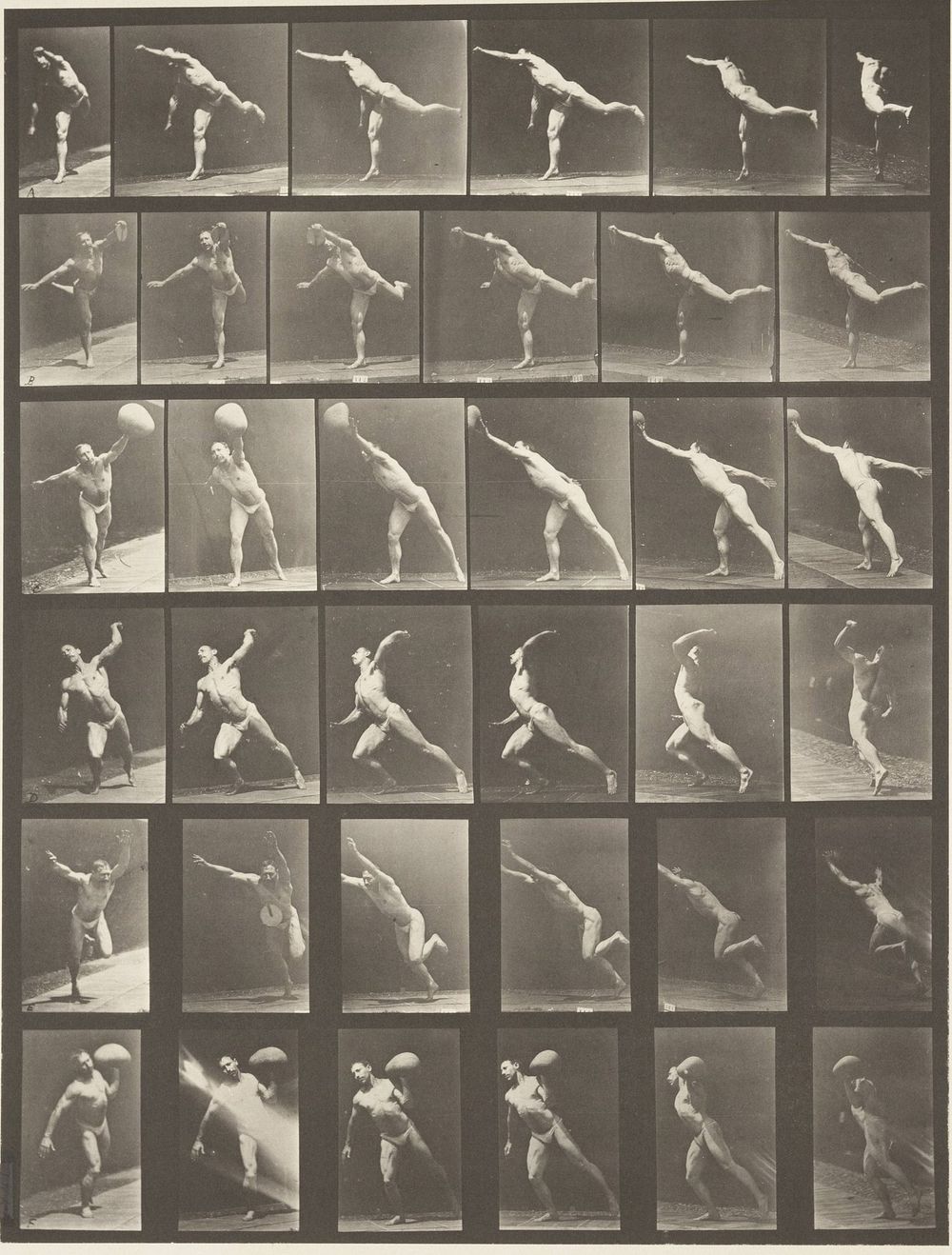
The anthropologist Mary Marzke tested a different idea. Early humans did not just walk. They threw, struck, dug and lifted, often with tools in their hands. In 1988 she recorded the glute max in six people while they did these kinds of movements.
The muscle fired strongly when the trunk swung, as in throwing or striking, and worked long and hard when people lifted while bent forward. Her reading was that the human glute max controls the trunk during the forceful, tool-using movements our ancestors made every day.
Answer 3 · Lieberman and colleagues, 2006: running
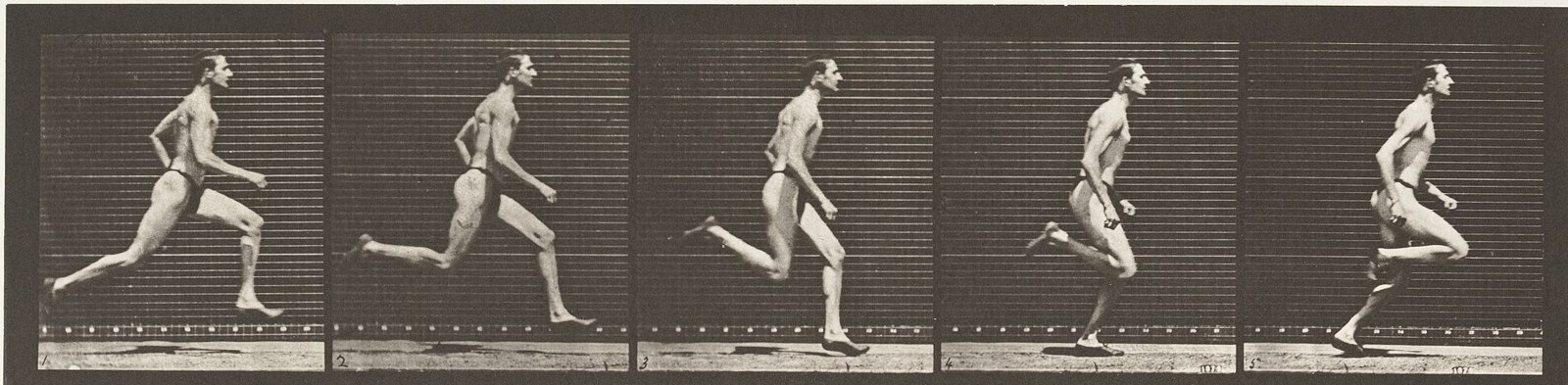
In 2004, Dennis Bramble and Daniel Lieberman published a famous paper in Nature arguing that endurance running helped shape the human body. Two years later, Lieberman's team at Harvard tested what that would mean for the glutes. They recorded the glute max while people walked and ran on a treadmill.
In walking, on the level or uphill, the muscle stayed mostly quiet. Then the walk became a run, and the activity rose sharply.
They also worked out what the muscle is doing during a run. It does two jobs. It stops the trunk from tipping forward each time the foot lands. And it slows the swinging leg before the next step. Running, in their view, is where the big human glute earns its keep.
Who is right?
Probably all three, in part. Sideways balance, tool use and running all describe the same basic job: a muscle that controls the trunk over the leg when the body is working hard.
Part 3 · What is still open
When did it get bigger?
Here is the honest part. The running idea is strong and widely cited, but it is a hypothesis, not a closed case. To prove it, you would need to know when in our evolution the big glute appeared, and whether that matches when our ancestors started running long distances. Muscle does not fossilise, so scientists have to read it from the shape of fossil hip bones.
The 2006 paper itself calls that evidence equivocal, meaning it can be read more than one way. Good science says so out loud, and so do we.
- c. 1800Cuvier: the glute is for standing upright.Idea
- 1950s to 60sFirst recordings: quiet in standing and walking.
- 1972Stern: it balances the trunk sideways.
- 1988Marzke: it controls the trunk in tool use.
- 2004Bramble and Lieberman: humans are built to run.
- 2006Lieberman: the glute max wakes up when we run.Key
The old belief this chapter tests
"The glutes are for standing upright and walking."
Not supportedIt was taught for generations, but the recordings never backed it up. The muscle is mostly quiet in both. It works hard when we run, climb, lift, throw and balance on one leg.
What this means for training today
If the glute max is built for hard work like running, climbing and lifting, it makes sense to train it with hard work, not gentle moves. That is the thread the next chapters follow, from the clinic to the gym.

